Hi my name is Lucy . I live on the West Coast of Canada and I am fifty-seven years old and I love sailing , painting and gardening.
I found out over 35 years ago that I had TMJ when I went to my Doctor about an earache. When he couldn't find any infection he referred me to an Ear, Nose and Throat Specialist. It sounds funny but the Specialist had me stick my fingers in my ears and open and close my jaw. It was then I felt my jaw clunk unevenly and
Temporomandibular Joint Disorder was the name he gave me for the sharp pain in my ear. TMJ causes this symptom along with many others. I needed TMJ or TMD treatments.
I was given some stretching and resistance exercises to do and was suggested I take some muscle relaxants and avoid eating things like Big Macs. I was interested in what had caused this and was told that it could have been dental work (some of which I had done recently) or it was stress related;( also a possibility) as stress can be one of a number one tmj causes.
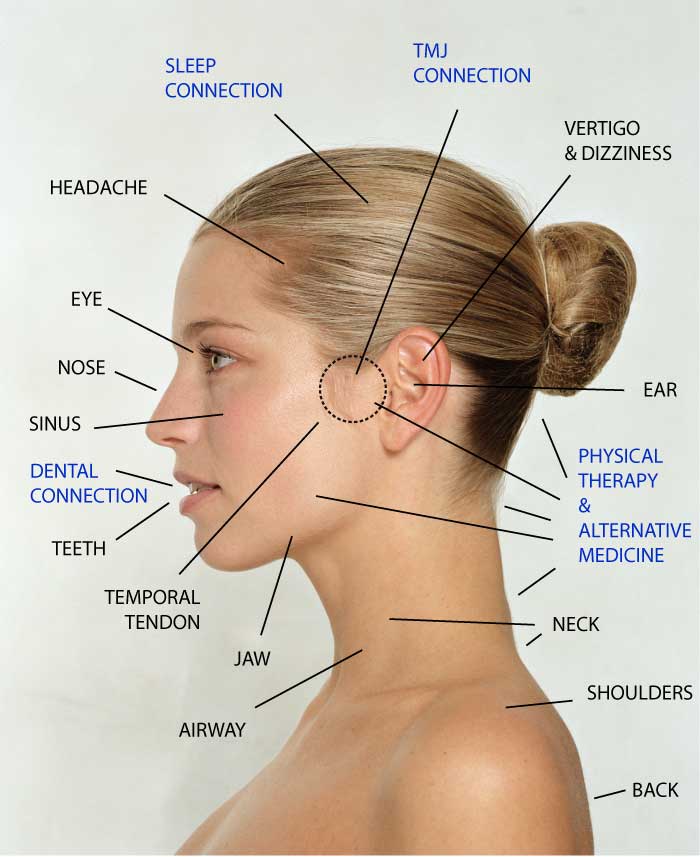
It wasn't until recently that I became very very interested in TMJ jaw disorders after I experienced a wicked episode of neck pain, shoulder pain, jaw pain and head pain that sent me in search of some serious help for the pain TMJ was giving me.
What is TMJ Disorder?
TMJ disorders (TMJD) cause pain and tenderness in the TemporoMandibular joint (TMJ) — the joint just in front of your ears on either side of your head where your lower jawbone meets your skull. It is by far the most complex and most over-worked joint in the human body.
TMJ jaw disorders can be caused by many different types of problems — TMJ causes are often very individualized and there is a long list of causes including arthritis, jaw injury, or muscle fatigue from clenching or grinding your teeth.
In most cases, the pain TMJ causes and the discomfort associated with TMJ disorders can be alleviated with self-managed care or nonsurgical treatments. About 5% of all TMJ cases are severe, such as TMJ dislocation and may need to be treated with dental or surgical interventions. TMJ surgery should be a last resort and your decision to have TMJ surgery should be arrived at with the help from a TMJ specialist.
Symptoms of TMJ

- Headaches, migraine headaches.
- Jaw locks opened or closed.
- Ringing or buzzing in the ears.
- Hearing loss.
- Problems swallowing.
- Neck pain and shoulder pain and back pain.
- Stiffness in jaw joint.
- Inability to open mouth wide.
- Inflammation, swelling.
- Clicking and popping sounds.
Types of Treatments for TMJ.
There are many treatments for TMJ that range from very passive of exercises to the extreme of invasive surgical procedures.
Exercises. Ranging from passive movements to stretching and resistance.
Diet and stress management.
Medications. Anti-inflammatories, muscle relaxants.
Mouth appliance or Splint
Corrective dental procedures.
Physiotherapy.
Acupressure.
Transcutaneous electrical nerve stimulation (TENS).
Ultrasound.
Botox treatments.
Trigger-point injections and Radio Wave Therapy.
Acupuncture
Prolotherapy _Injections of an irritant to stimulate repair of ligaments and tendons.
Surgical intervention.
Easy Exercises to help relieve TMJ.
These TMJ exercises below were given to me as a simple ways to reduce TMJ pain. Do them in the privacy of you own home. Done regularly, you can expect to have increased movement in your TM joints and more relaxed muscles. Start with 3 repetitions and increase over time to 10 repetitions.
1. First, with mouth closed place the palm of your hand under your chin and creating resistance with your hand slowly open your mouth wide. Now that mouth is wide open place two fingers of the same hand on the lower teeth, then slowly close the mouth again using resistance. Go slowly and be gentle. Do repetitions.
2. This exercise is similar to 1. except you thrust your jaw straight forward with the palm of you hand against the chin giving resistance. Once the jaw is fully extended place two fingers of the hand on the lower teeth and now using resistance pull the jaw straight back to its resting position. Do repetitions.
3. Make a fist with your left hand and place flat side of your fist against the left side your jaw. Using resistance slowly move your jaw to the left, once fully extended to the left place a right hand fist against the right side of jaw and using resistance move the jaw all the way to the right. Do repetitions.
4. Gently close your mouth and touch the roof of your mouth with your tongue. Hold the tongue on the roof of your mouth as you slowly and gently open and close your mouth. Do repetitions.
One important thing to note: if you have severe TMJ symptoms, it is always a good idea to consult with a doctor in order to determine the best treatment plan. These exercises may be helpful to relieving the pain, but there may be other treatments to consider as well.
If you do these exercises daily it will increase flexibility the joint and also strengthen and help to relax the jaw muscles. These
TMJ exercises can greatly alleviate the pain and discomfort associated with TMJ, and contribute the the healing of this disorder.
NY Times Article Best Treatment for TMJ May be Nothing, worth a read at
http://www.nytimes.com/2009/02/03/health/03brod.html
***************************************************************
A wonderful program to try for those of you seeking relief from TMJ pain is
TMJ No More
A Natural Remedy for TMJ that has helped thousands of men and women.
****************************************************************
Linking Pages
Your smile says a lot about you. Get oral health information, news and treatments for TMJ,TMD and many oral health issues.
***************************************************************